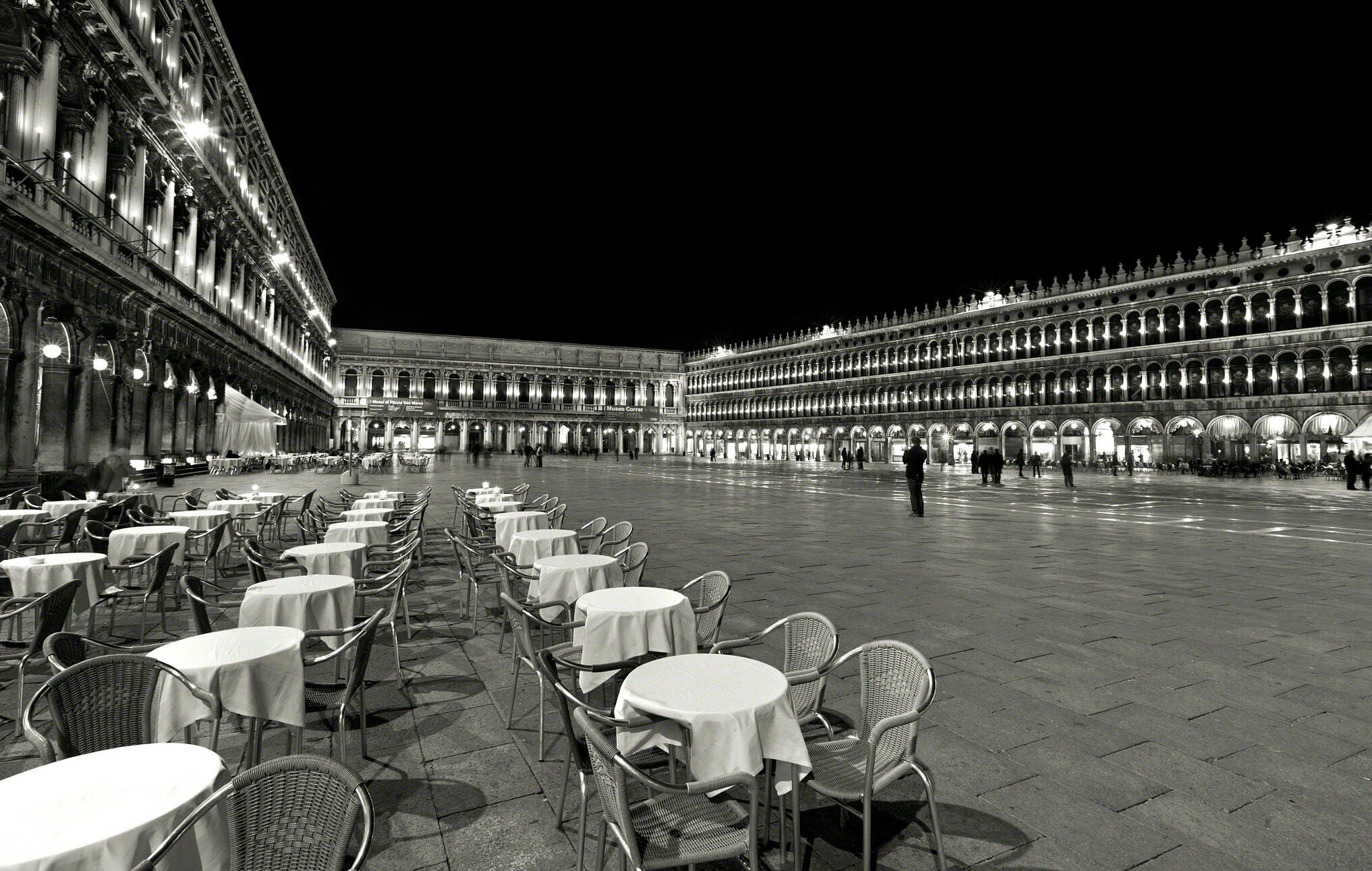
The most lucky of us have had the chance to visit Venice, certainly a top destination for tourists. Visitors seem to flow through every winding alley of this floating city, eventually draining into the heart of it all, Piazza San Marco.
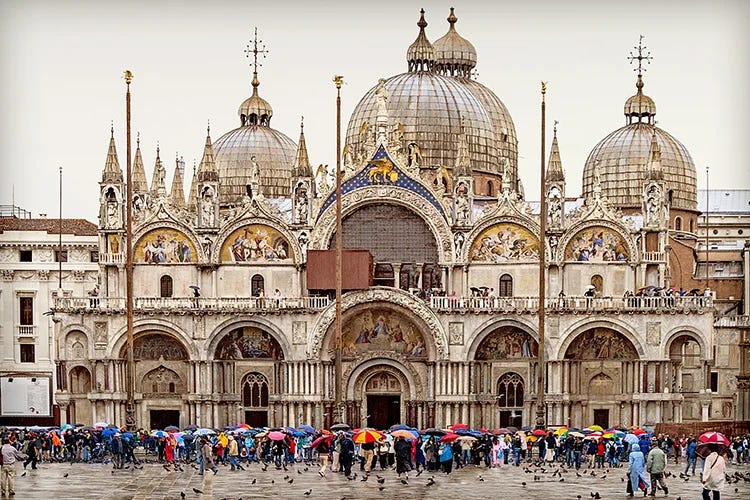
The cafés, the serenading violins, the bended-knee marriage proposals all give life and color to San Marco’s open square, but it is the church, St. Mark’s basilica, that grounds it.
The church façade has a look that can’t easily be pinned down. The arched doorways and tiered galleries connect to the grand Gothic cathedral tradition, but there is something spicy about this style–those domes and irregularly shaped archivolts are not from France.
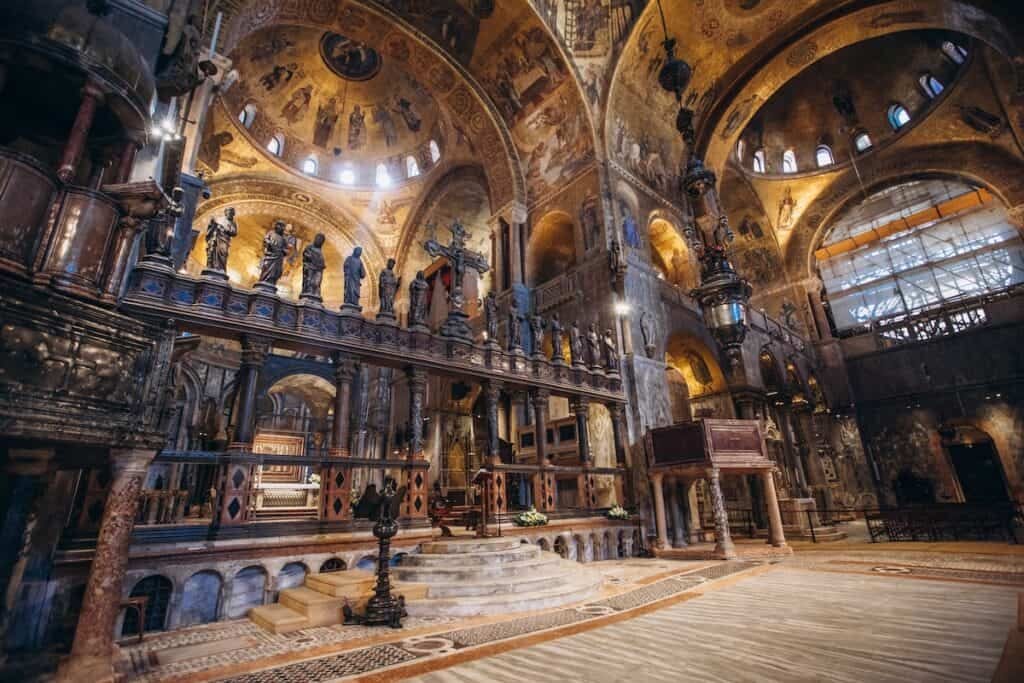
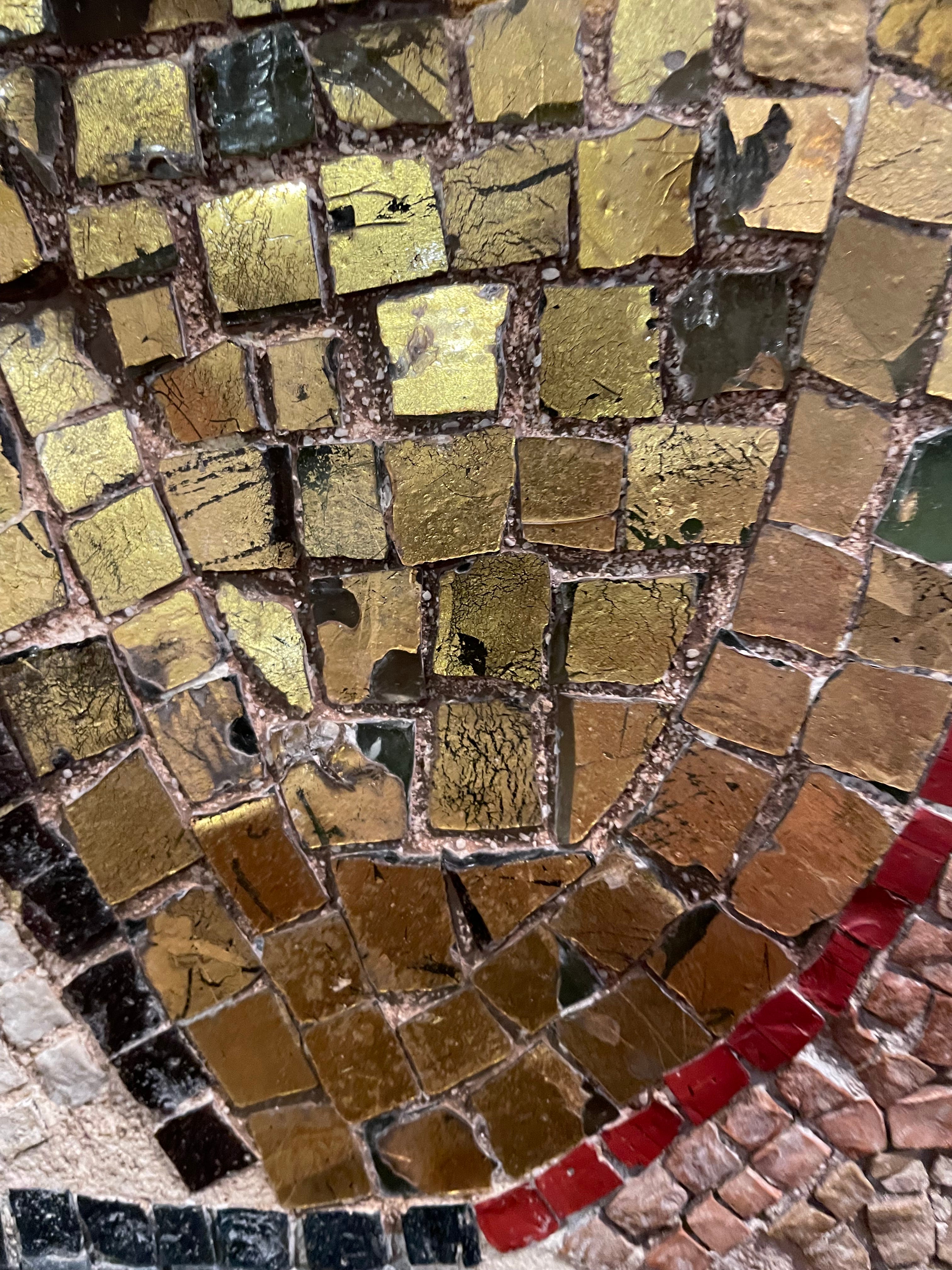
St Mark’s was originally designed in the Byzantine style, a style that was brought to Venice from Constantinople.* What makes Byzantine churches special is the surprising golden light that reflects off of the mosaics that decorate the entire upper section of the church.
A mosaic is a 2-dimensional image made from thousands (maybe millions?) of small ceramic/stone pieces, colored or leafed with gold. When the light from the windows, combined with the candles reflect off of the surface of the gold tesserae, it creates an otherworldly atmosphere. Add floor mosaics, interior domes, intricate ceiling coffering, and luxe furniture, and this space becomes an awesome multimedia haze!
Venice sits at the crossroads between east and west–business in this port city was intercontinental. Venetians in power in the 9th century aligned themselves with the Catholic Church. The impetus for the church was to have a holy burial site for the Apostle Mark. Legend has it that Mark was interred in Alexandria, and merchants affiliated with the fourth crusade found and hid Mark’s body below barrels of pork and cabbage, before transporting it to Venice, in efforts to repay debts that they had directly with Venetian officials. Whatever financials were settled, architects, mosaicists, and artists of all stripes created this Byzantine-style cathedral to honor their holy relic of St Mark and create a divine space for believers to find spiritual connection.
Cultural Treasures
When thinking about St Mark’s, imagine Christianity in the 9th century: Christianity emerged as an illegal, fringe religion during the Roman Empire to a ruling theocracy in Byzantium and beyond. There was tension in Christian art, with a commandment to forsake graven images and yet…the Roman pagan visual tradition that was ripe with image-worship was such a tempting art tradition to draw from.
In many ways, Byzantine artists chose to step away from the Roman art tradition (as gorgeous as it was). Instead of filling holy spaces with sculpted gods and goddesses, the Byzantine churches created spaces that were more of a vibe.
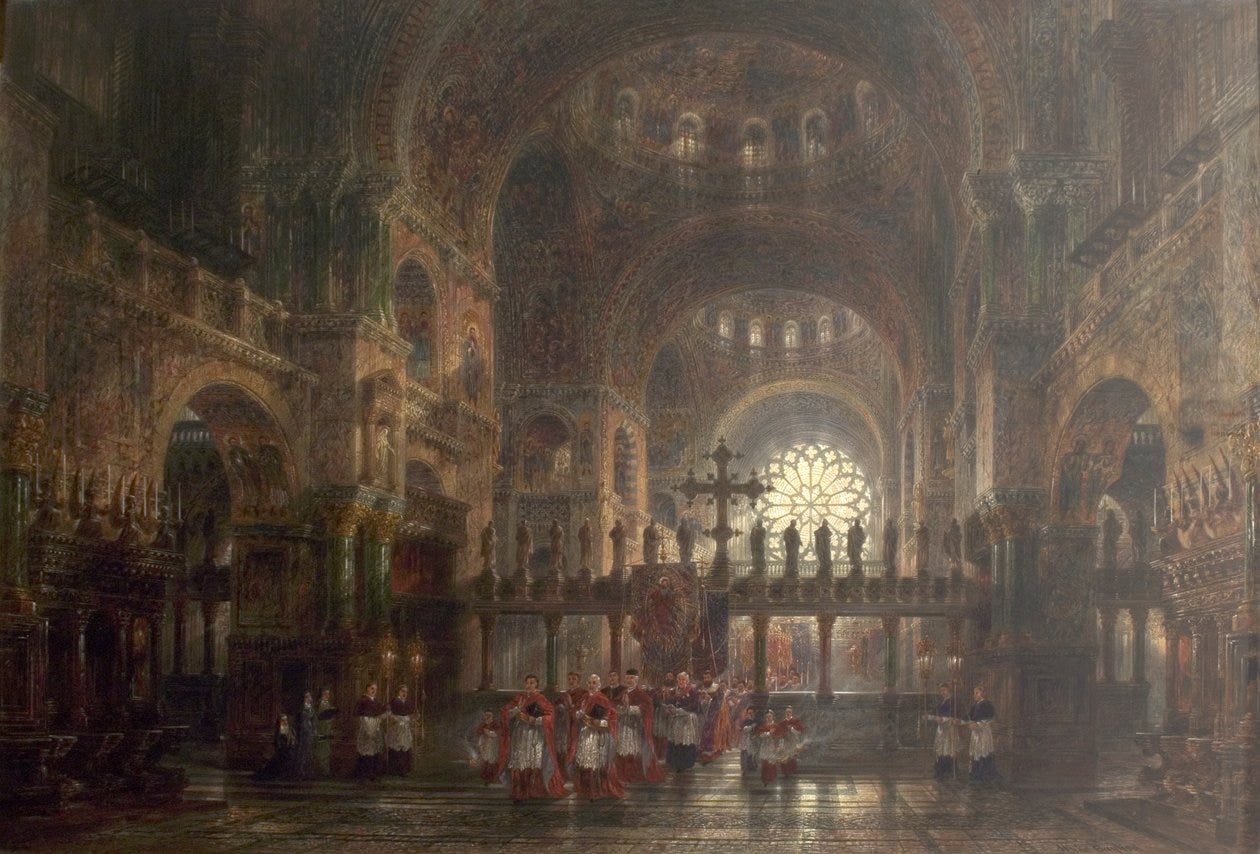
Wyke Bayliss - Interior of St Marks Basilica Venice Italy ,1877
The walls of St Mark’s, covered in gold tesserae, have a glistening quality. When light streams through the windows pierced in the domes, it bounces off the walls and creates a hanging, atmospheric haze. While the mosaics do feature images of holy people, it is the haze, that shimmering, suspended air that holds the divinity of God. The portraits of people are abstracted, generalized, more like spiritual reminders of what to think about to align with holy energy. But it is the quality of light, of air that sits all around the church interior, that is the stuff of God. For the worshipper, she cannot simply worship the sculpture or mosaic for a transactional religious checkmark. Instead, she is invited into this otherworldly golden haze to surrender and immerse her spirit to the divinity that is all around her.
Being a seeker of God myself, I love this invitation, to open myself to the divinity that always already exists in the ether all around me. While a Byzantine golden haze might help me see it, I’m trusting that it is right here, if I can just slow down to breathe it all in. Here’s to seeing the shimmer and receiving the golden moments that linger in your life!
*The Hagia Sophia is the textbook example of a Byzantine church, now in Istanbul, which was once Constaninople.
Thanks for reading Becca’s Substack! Subscribe for free to receive new posts and support my work.